The other side of Argentina
Chacarera, zamba, and the rich tradition of Argentine folk dance — joyful, rhythmic, and deeply human. The only folklore workshops in Belgium.
Beyond tango
When people think of Argentine dance, they think of tango. But Argentina has a vast, rich folklore tradition that predates tango by centuries — music and dances born in the provinces, the pampas, the Andes, the northwest.
These are dances of community and celebration. They're danced at peñas (folk gatherings), festivals, family events, and wherever Argentines come together to share their culture. Unlike tango's intimate close embrace, folklore dances are open, joyful, and communal — full of rhythmic footwork, handkerchief play, and the kind of energy that makes everyone in the room smile.
I grew up immersed in this tradition and have performed chacarera, zamba, and other Argentine folklore dances alongside my tango career. Now, for the first time in Brussels, I'm offering workshops in these beautiful, little-known dances.
The Dances
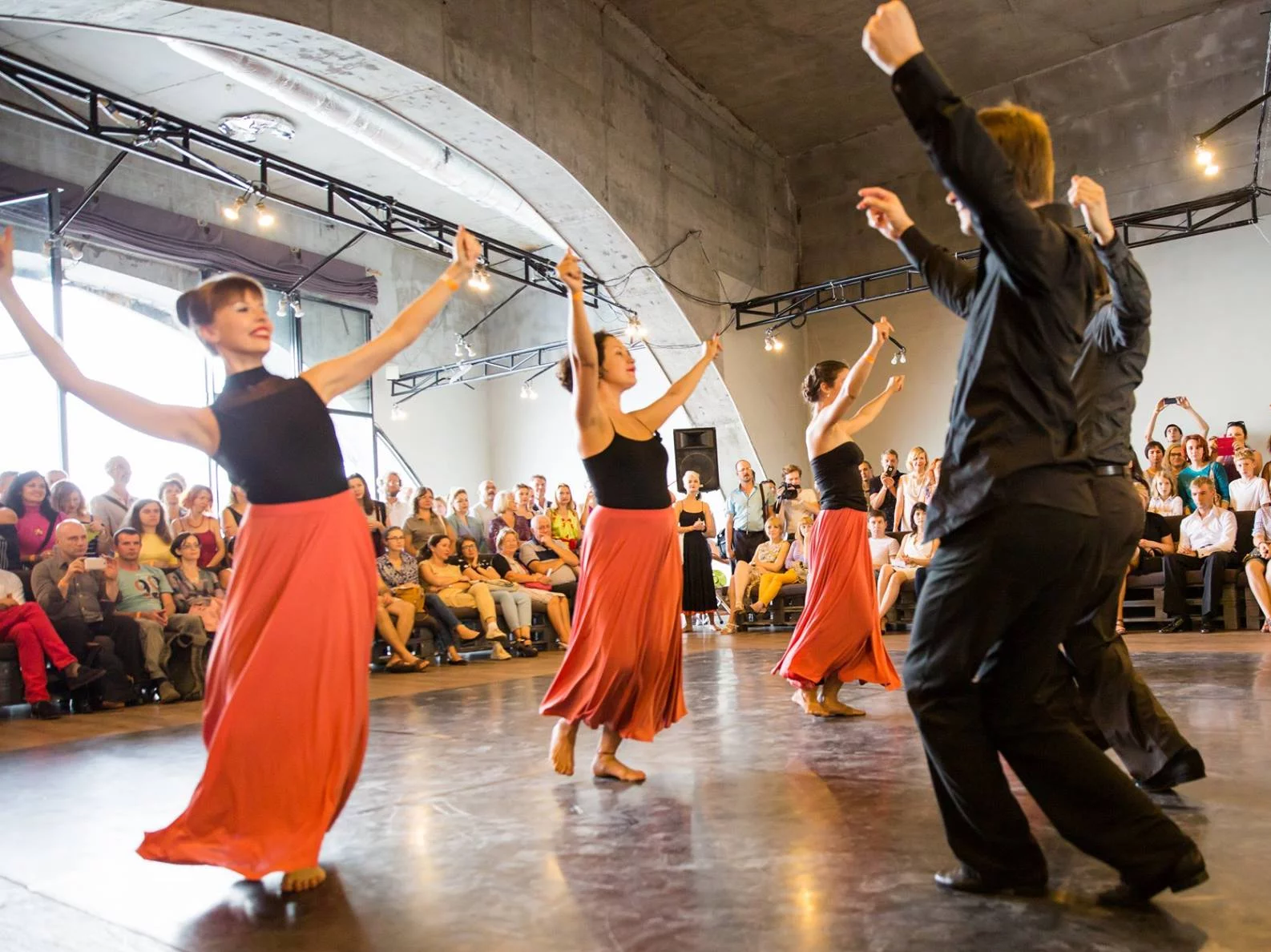
Pure joy in motion. Chacarera is a lively partner dance with rhythmic footwork (zapateo), handkerchief waving, and structured figures — vuelta, zapateo, zarandeo, and media vuelta. Partners face each other but don't touch, communicating through rhythm, eye contact, and the energy of the music.
The music is infectious — guitar, bombo drum, violin — with a driving 6/8 rhythm that makes it impossible to stand still. Chacarera is danced at every peña in Argentina, and once you learn it, you'll understand why.
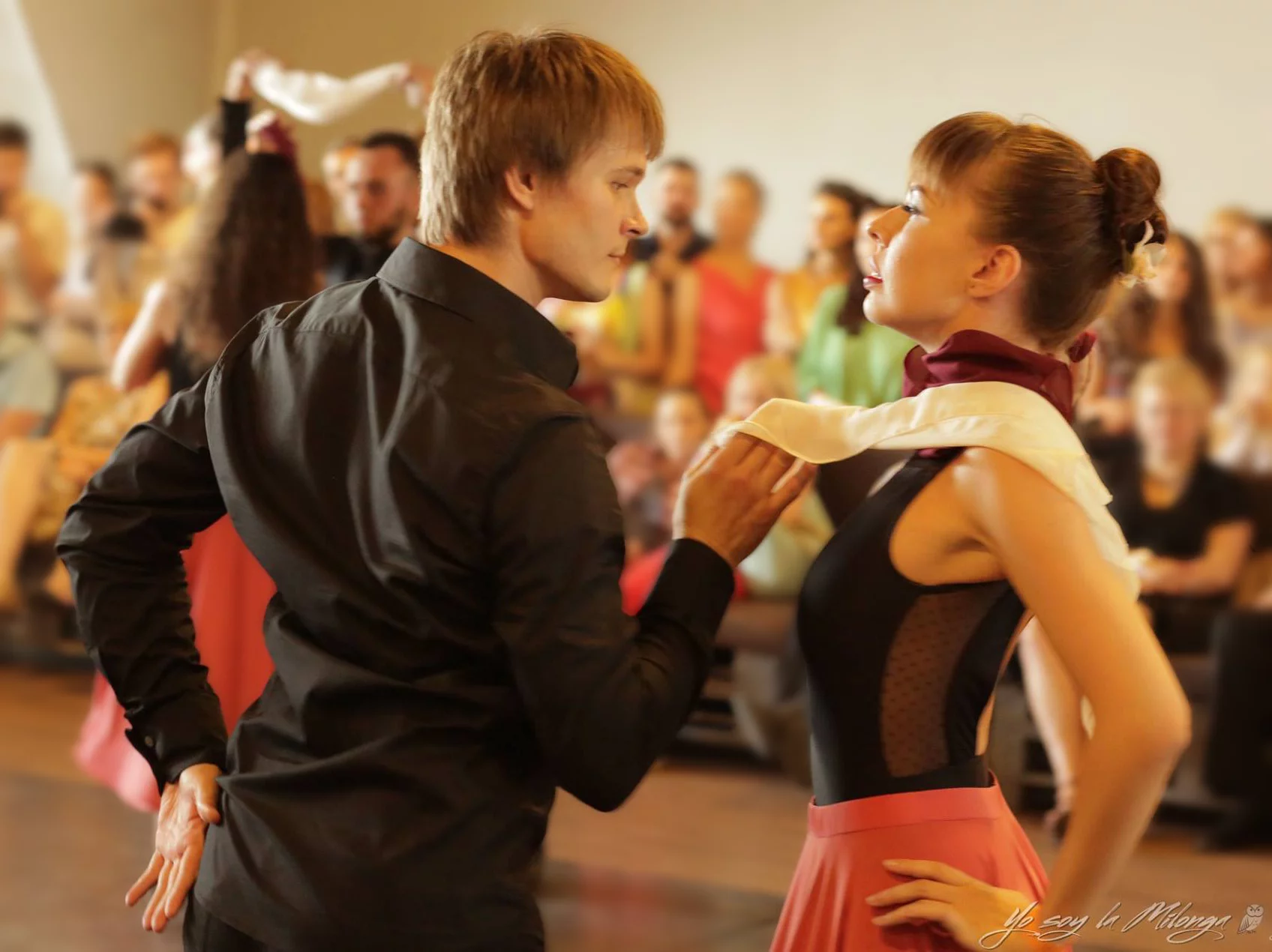
If chacarera is joy, zamba is poetry. A slow, romantic courtship dance where partners circle each other waving white handkerchiefs — the pañuelo becomes an extension of the heart, expressing what words cannot. Unlike the Brazilian samba (completely different!), Argentine zamba is gentle, flowing, and deeply emotional.
The dance tells a story of attraction and approach — partners draw closer, retreat, and finally come together in the "media vuelta" with handkerchiefs meeting above. It's considered one of Argentina's most beautiful traditional dances.
See It
Workshops
A 2-hour workshop introducing both dances — perfect for groups who want a taste of Argentine culture beyond tango. We learn the basic figures, the music, the handkerchief, and by the end, everyone is dancing together.
Argentine folklore is ideal for team building — it's communal, joyful, and brings people together in a way no PowerPoint ever could. Available for corporate events, cultural evenings, Latin-themed parties, and private celebrations.
For dancers who want to go deeper — a half-day intensive covering multiple chacarera and zamba variations, zapateo technique, musicality, and the cultural context of each dance. Ideal for tango dancers wanting to explore the broader Argentine dance tradition.
Context
Born in Buenos Aires. Urban, intimate, close embrace. Improvised between two people. Golden age orchestras. Danced at milongas. The dance of the city — nocturnal, passionate, introspective.
Born in the provinces — pampas, Andes, northwest. Open, communal, joyful. Structured figures with room for expression. Guitar, bombo, violin. Danced at peñas and festivals. The dance of the land — sunlit, rhythmic, celebratory.
Both are deeply Argentine. Both are deeply human. Learning one enriches the other — and together, they give you a complete picture of Argentine dance culture that very few people outside Argentina ever experience.
FAQ
A traditional Argentine folk dance from the northwest provinces. It's lively, joyful, with rhythmic footwork (zapateo), handkerchief waving, and structured figures. Partners face each other but don't touch — all communication happens through rhythm, eye contact, and energy.
Argentine zamba is a slow, romantic courtship dance — completely different from Brazilian samba. Partners circle each other waving white handkerchiefs. It's gentle, flowing, and poetic. One of Argentina's most beautiful traditional dances.
None at all. Argentine folklore dances are social dances designed to be enjoyed by everyone. The movements are natural and joyful. If you can walk and clap, you can dance chacarera.
Both are Argentine, but they come from different worlds. Tango is urban (Buenos Aires), intimate, improvised. Folklore is from the provinces, open, communal, structured. Many Argentine dancers do both. Learning folklore deepens your understanding of Argentine culture and musicality.
Contact me with your group size, preferred date, and what you're looking for (intro, team building, deep dive). I'll put together a proposal tailored to your event.
Comfortable clothes and shoes you can move in. For chacarera, you'll want shoes that allow some stomping (zapateo). A handkerchief or scarf — I provide them if you don't have one.
Whether it's a cultural evening, a team event, or a group of friends who want to try something new — let's bring the energy of a peña to your event.